

Research
The research of the Chair for Dynamical Systems and Data focuses on the data-driven analysis and forecast of complex (dynamical) systems. One particular aspect is reduced order modeling of such systems by developing new tools on the interface of dynamical systems, machine learning and data science.
A selection of topics can be found below. Please also refer to our publications.
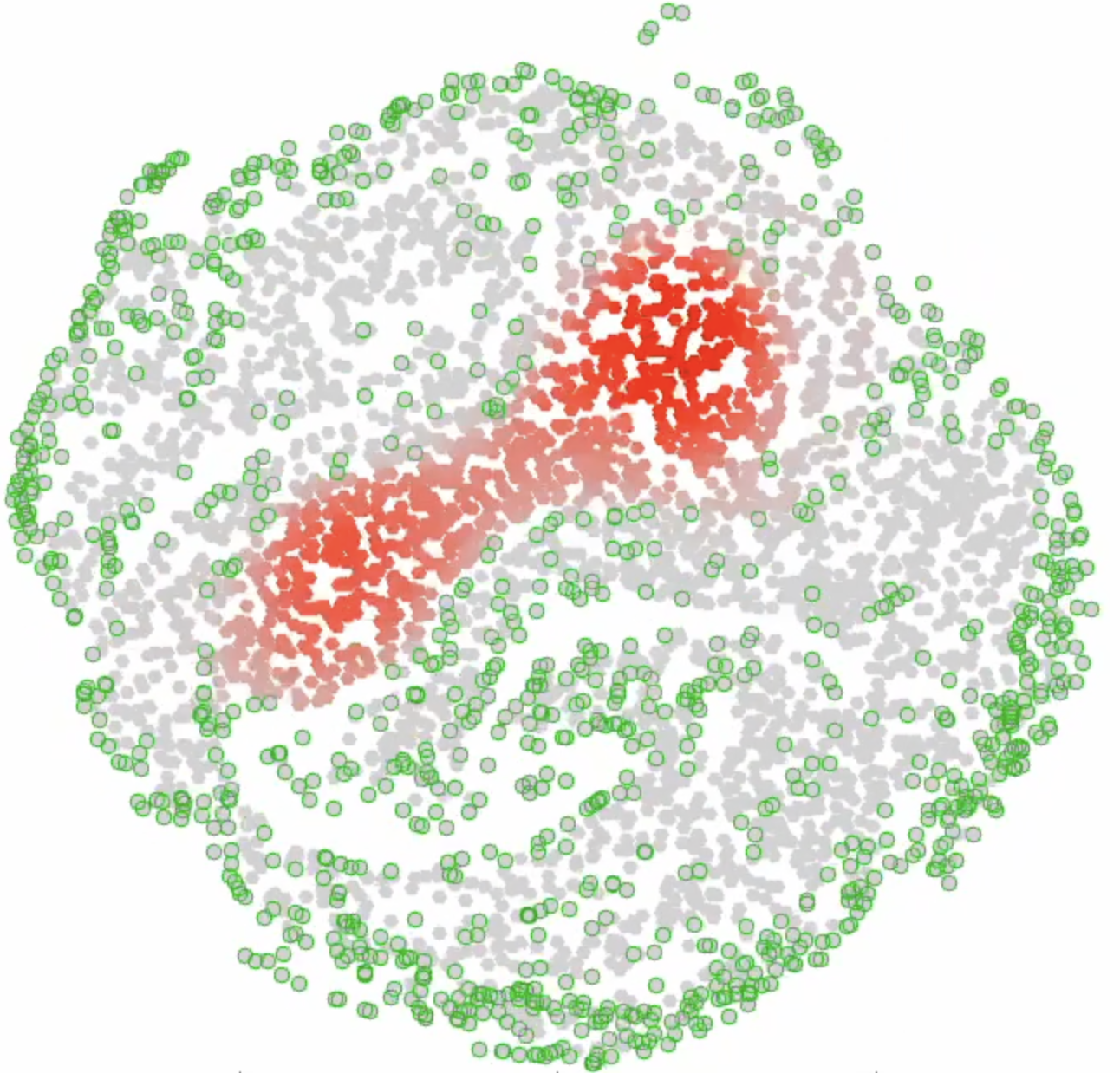
Coherent sets in nonautonomous flows
Coherent sets are time-dependent regions in the physical space of nonautonomous flows that exhibit little mixing with their surroundings and are robust under small random perturbations of the flow. We develop mathematical methods for the characterization and computational extraction of coherent sets from mathematical models or trajectory data. The scenarios considered so far include periodically and quasiperiodically forced flows, finite-time flows, mesh-free numerical approximation, as well as the identification of the emergence and disappearance of coherent sets. The mathematical toolbox includes dynamical systems theory, stochastic processes, functional analysis, differential geometry, and numerical analysis. The resulting methods are applied in fluid dynamics, in particular in oceanography and the atmospheric sciences.
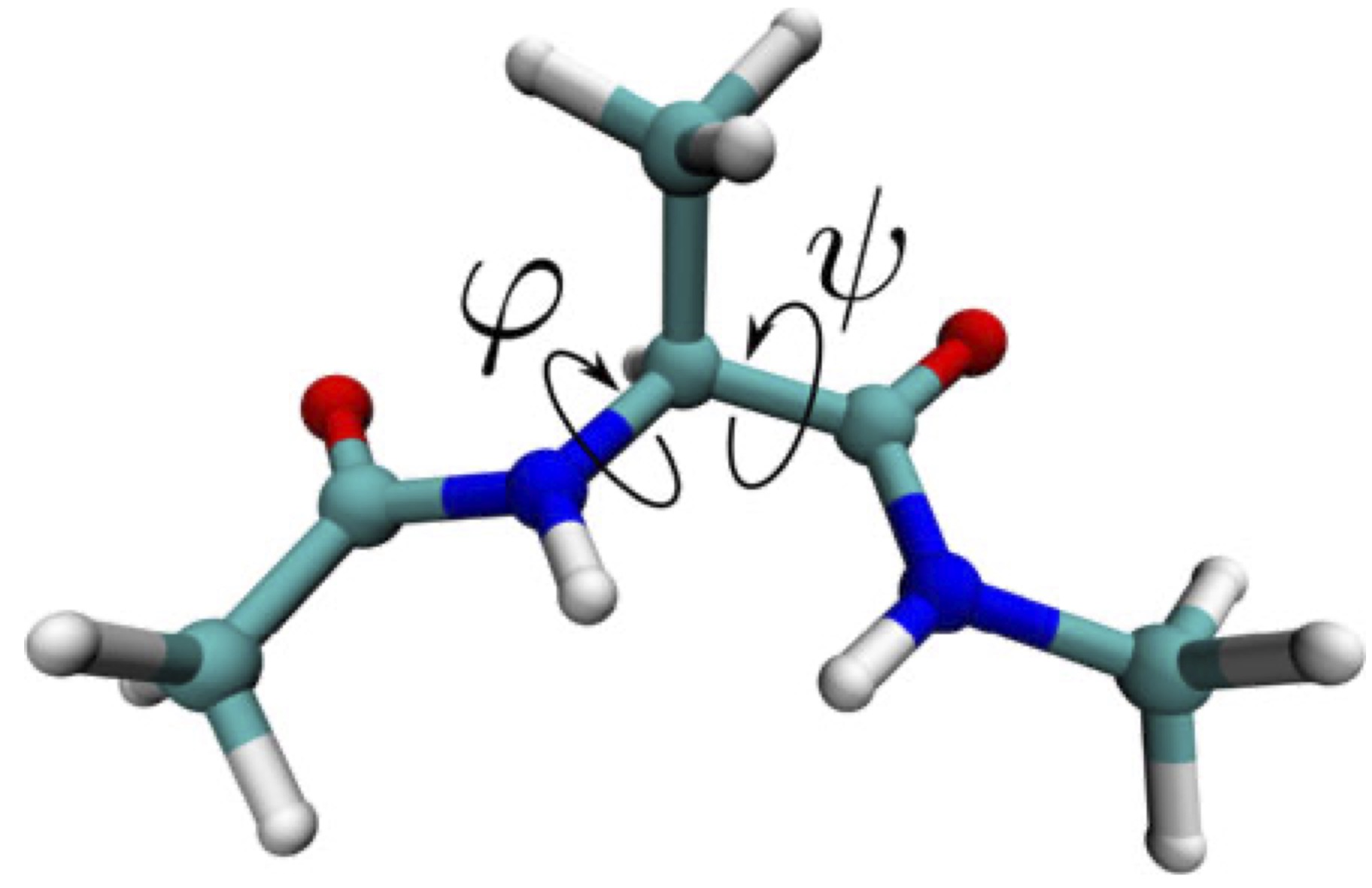
Collective variables in complex dynamics
The collective microscopic dynamics of interconnected components often gives rise to emergent macroscopic phenomena that cannot be understood by examining individual entities in isolation. To characterize such emergent collective behavior, reduced or aggregated variables of the full system state—known as collective variables—are used throughout the sciences. We work on the mathematical description and numerical computation of these variables to gain physical insight and to obtain reduced-order models that describe the effective emergent dynamics. Applications include molecular dynamics, fluid dynamics, and dynamical processes on networks.
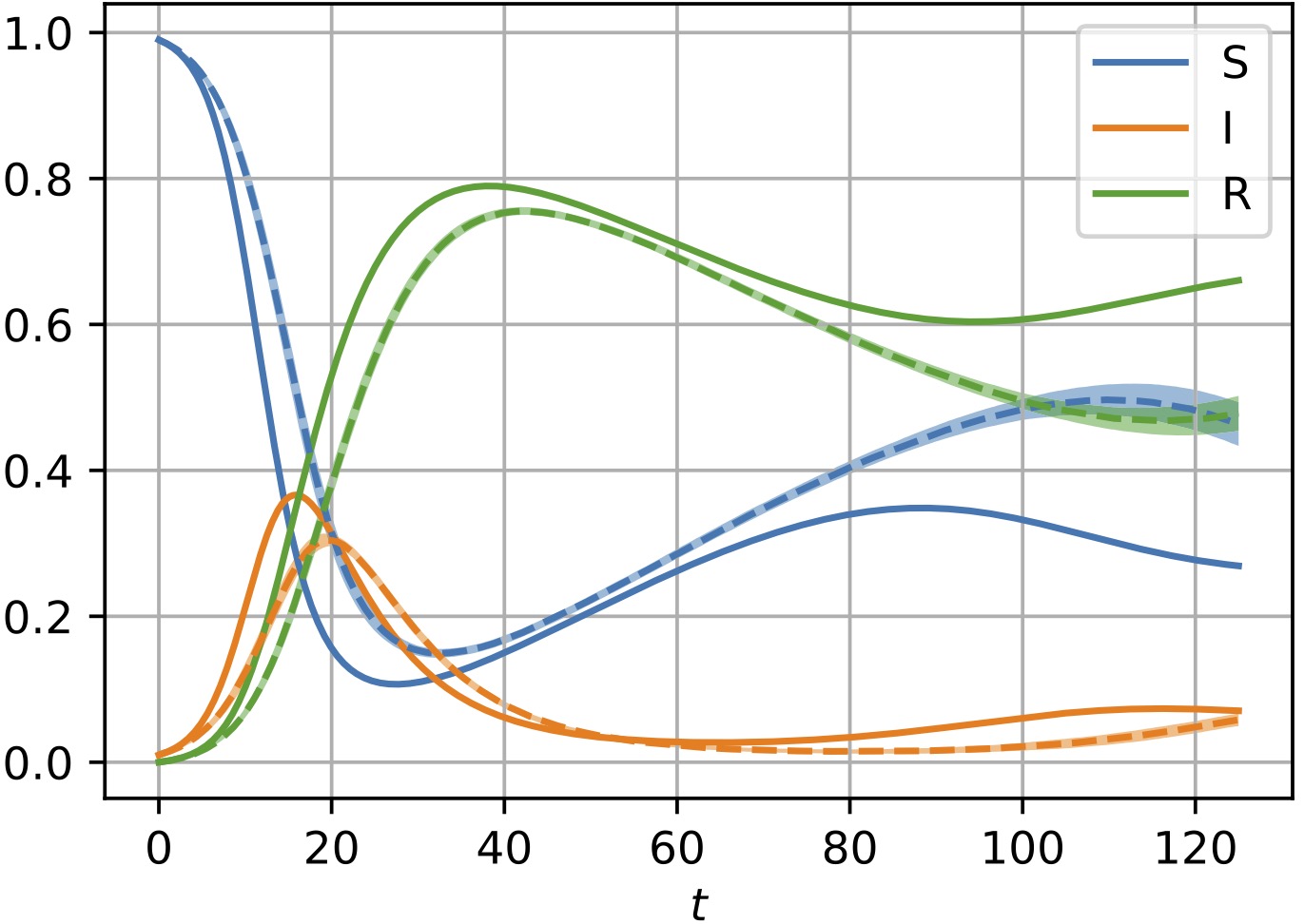
Dynamical processes on networks
Dynamical systems and stochastic processes on networks (graphs) arise when each node represents a subsystem and the edges represent interactions between subsystems. Depending on the dynamical rules governing the subsystems and on the network connectivity, a rich variety of emergent macroscopic behaviors can arise. Our main interest lies in deriving effective low-dimensional models, both analytically and from data (for example, mean-field equations). Applications include epidemiology and opinion dynamics.